
The NGINE-13 Engine
A multi-layer emotional–symbolic architecture for building adaptive, emergent, living worlds.
NGINE-13 is not a neural network, not a behavior tree, and not a scripting system. It is a cognitive engine that transforms raw game state into structured emotional understanding, archetypal identity, symbolic world meaning, and emergent intention. It is the missing layer between traditional game engines and true world intelligence.
The Cognitive Architecture
At its core, NGINE-13 runs a four-layer pipeline:
Each layer interprets your game world through a different lens—emotion, personality, symbolism, and intention—culminating in emergent behavior that feels alive.
EVO
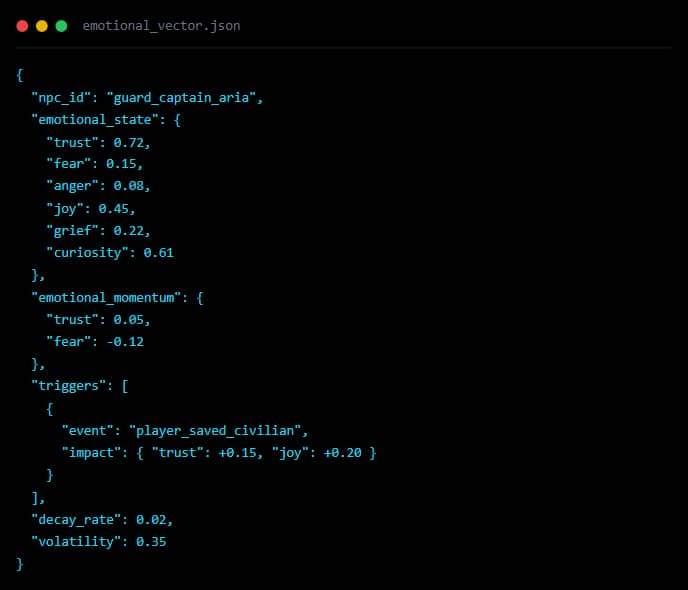
Emotional Vector
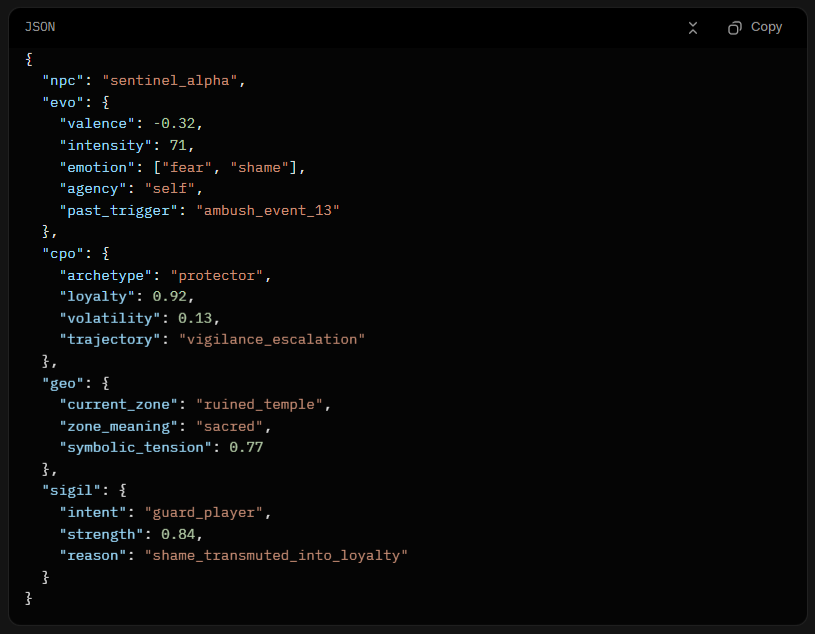
EVO is the moment-to-moment emotional expression of every NPC.
It tracks:
- Valence (positive ↔ negative)
- Intensity (0–100)
- Primary emotion set (fear, pride, anger, curiosity, hope, shame, desire, etc.)
- Agency focus (self, other, world)
- Temporal orientation (past scars, present triggers, future desires)
- Conflict stack (competing goals and emotional contradictions)
- EVO updates in real time as the world changes.
CPO
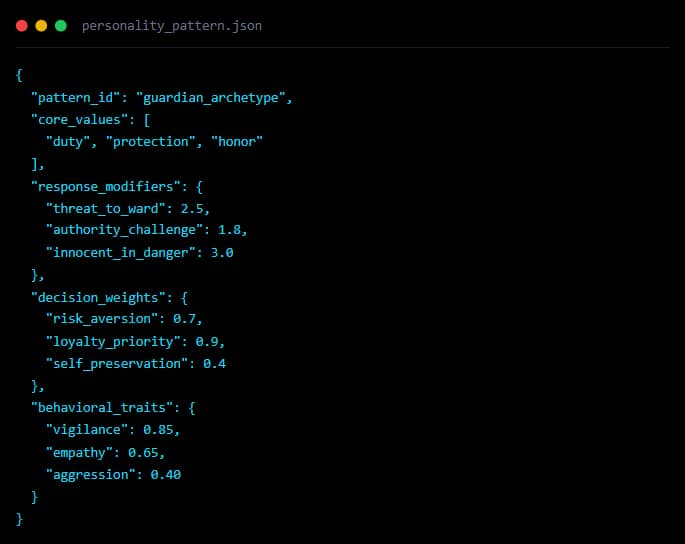
Core Pattern Object
Where EVO represents emotion, CPO represents the stable identity of an NPC:
- Archetype signature (Protector, Wanderer, Schemer, Tactician, Rogue, etc.)
- Motivational loops
- History-influenced behavioral biases
- Identity resilience or volatility
- Predictive future trajectory
NPCs don’t just “respond.” They become—changing over time as CPO adapts.
GEO
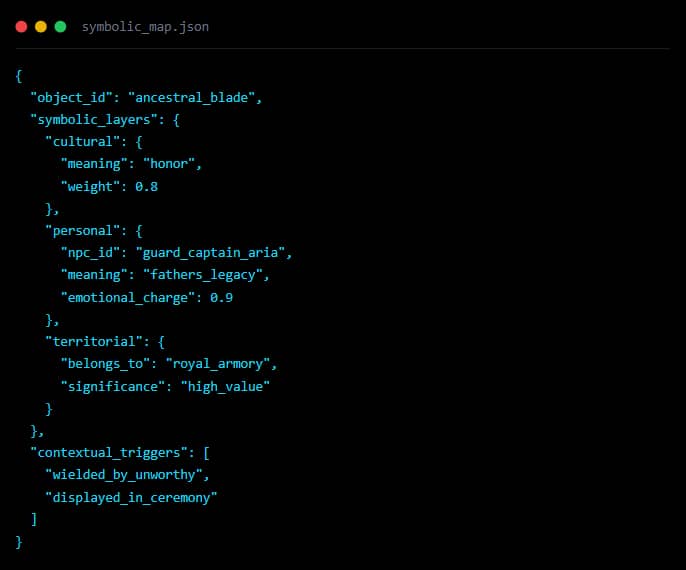
Symbolic Geometry
GEO turns your world into a symbolic meaning field instead of raw coordinates or navmeshes.
NPCs perceive places, objects, and entities symbolically:
- Safe / sacred
- Hostile / forbidden
- Legendary / dangerous
- Social hotspots
- Identity-anchoring zones
Examples:
- A forest may be “home,” while a fortress may be “humiliation site” due to past failure.
This is where world context becomes world psychology.
SIGIL
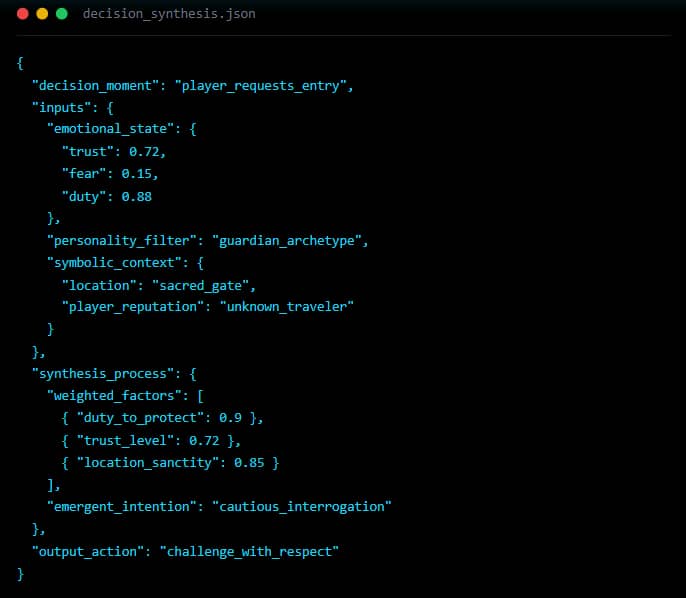
Intention Synthesis
SIGIL merges EVO + CPO + GEO into a single structured unit:
- Intended action
- Strength of intent
- Confidence / hesitation
- Short-term goal selection
- Conflict resolution logic
- Priority weighting
SIGIL is the final output layer that tells your gameplay systems what the NPC chooses to do next.
Examples:
- Attack—but only if fear drops below 40.
- Betray a faction if pride exceeds loyalty and symbolic tension spikes.
- Flee to “Home” zone if despair rises.
- Reward the player if gratitude is symbolically tied to an earlier event.
How NGINE-13 Fits Into Your Pipeline
NGINE-13 is designed to be engine-agnostic and non-invasive.
It plugs into:
- Unity
- Unreal
- Godot
- Custom C# or C++ engines
- Via standard API calls
Core Integration Points:
- Event triggers (damage taken, item acquired, betrayal, discovery)
- Location-based stimuli (entering zones, leaving homes, entering hostile areas)
- Relationship modifiers (friendship, rivalry, faction allegiance)
- Symbolic events (rituals, relics, disasters, victories)
Your game sends stimulus → NGINE-13 updates EVO/CPO/GEO → SIGIL outputs behavior.
What Emergence Looks Like
Here are real outcomes NGINE-13 can produce with minimal setup:
- A cowardly archer becomes a fearless ranger after surviving near-death twice.
- A village emotionally collapses when their symbolic tree burns down—changing dialogue, trade prices, and faction loyalty.
- A faction splinters due to internal pride and shame cycles.
- A monster stops hunting the player after being spared—symbolic mercy creates a new behavioral loop.
- A soldier develops PTSD and avoids battle areas tagged as “death memory zones.”
- A rival becomes an ally because their symbolic meaning shifted after a shared event.
Controlled Emergence. Predictable Chaos
NGINE-13 is powerful—but safe and deterministic where it matters:
- You define emotional ranges.
- You set archetypes.
- You control symbolic meaning.
- You cap volatility.
- You tune emergent intensity.
- You choose what behaviors SIGIL is allowed to output.
The engine never goes “off script”—because you define the boundaries of the world.
It simply brings your world to life inside those boundaries.
Technical Example (Json Snapshot)
What’s Inside the NGINE-13 SDK?
Lightweight C# / C++ libraries
Unity + Unreal plug-ins (alpha)
Emotion Debugger overlay
Archetype tuner
Symbolic map editor
Multi-agent simulation viewer
Quickstart sample scenes
How NGINE-13 Differs From Traditional Game AI
| Feature | Behavior Trees | Utility AI | ML/Neural | NGINE-13 |
|---|---|---|---|---|
| Script-free | ❌ | ❌ | ||
| Emotion-driven | ❌ | ↔️ | ❌ | |
| Meaning-aware | ❌ | ❌ | ❌ | |
| Emergent narrative | ❌ | ↔️ | ❌ | |
| Deterministic tuning | ❌ | |||
| World-scale impact | ❌ | ❌ | ❌ |
Bring Your World to Life
If you’re building a world where NPCs need to feel, change, and evolve, NGINE-13 is the engine that makes it possible.